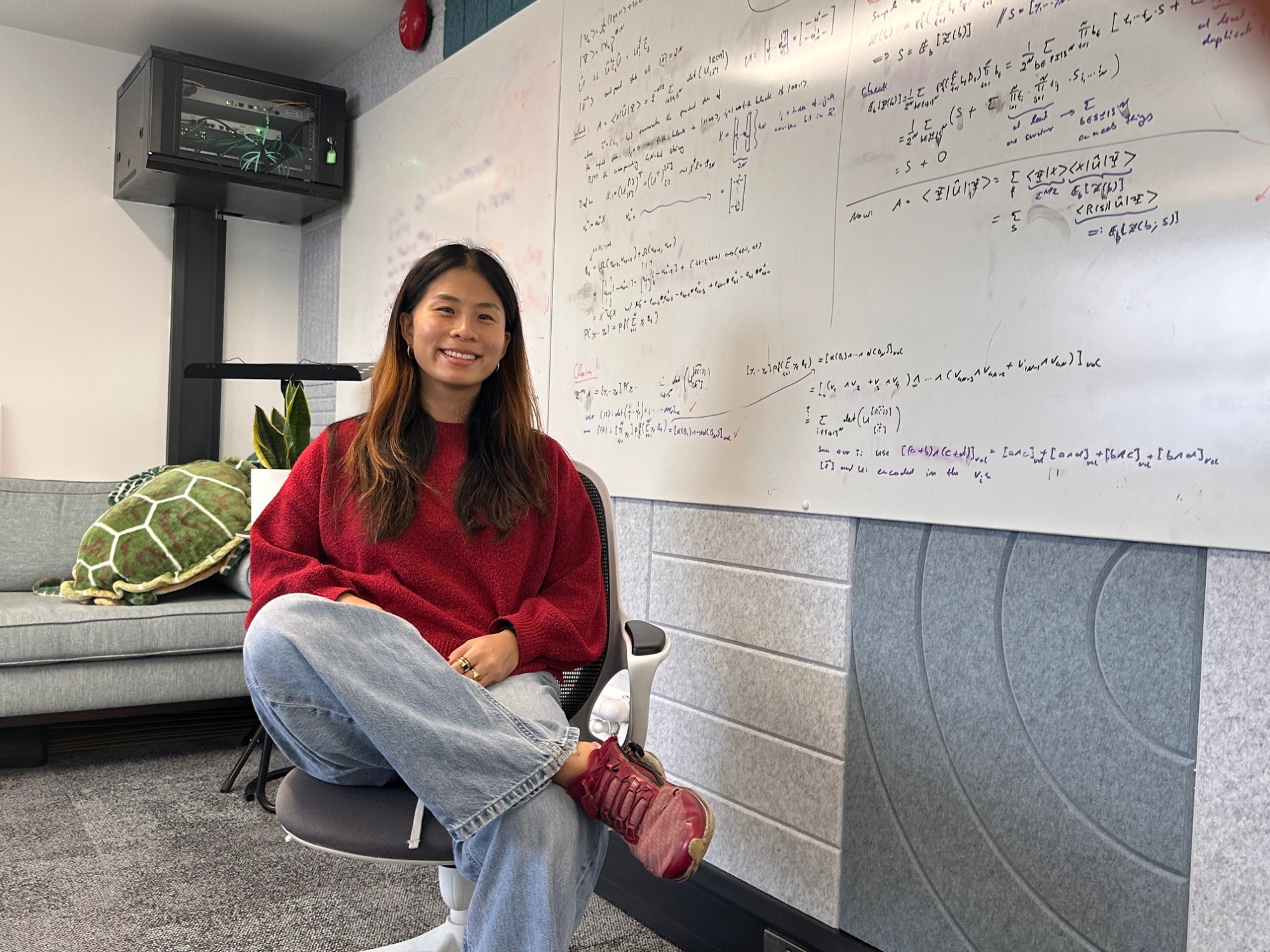
Meet Dr. Glenn Jones, Principal Quantum Algorithms Scientist based at our Bristol office in the UK.
Tell us a little about your role and what you do at Phasecraft?
I’m the Principal Quantum Algorithms Scientist at Phasecraft. I lead a team which is tasked with looking at how we can turn the progress being made by our algorithms and technology teams to solve real-world problems.
How long have you been with the company?
I have been working at Phasecraft since 2023. I joined after spending 15 years at Johnson Matthey, which is where most of my career has been. There I led the physical and chemical modelling team, running a range of classical simulations, from atomic-scale work to multi-scale simulations of whole devices.
It was a big leap to join Phasecraft, though I have never looked back. It’s really exciting being part of something new, working right at the cutting edge of technology, and actually being able to define and shape where the future goes.
What's a problem you've worked on at Phasecraft that wouldn't have been possible a few years ago?
I actually think about this question a little differently. We're tackling some of the same problems that have always existed, but we're developing methods that will help us tackle them better and more effectively.
As an example, a lot of the materials and chemistry industries are looking for new batteries that are more efficient, more stable and longer-lasting. And then you get other companies trying to build better catalysts that clean the air better. These are problems I've spent much of my career on, but there are limitations in the quality of the simulations you can do.
We're creating the algorithms and techniques so that, when the devices can handle better simulations, we'll be able to get better calculations, make more reliable predictions, and have a stronger influence on the solutions to these industry challenges.
Why do you think it's important to create algorithms that will bridge the gap between today's quantum computers and future hardware?
Beyond the bigger-picture need to understand problems, there's a practical reason. Suppose we just sit around and wait for the computers to arrive, whether that's in five, ten or 15 years, without thinking about the software and algorithms. Then we'll only start asking what to do with these computers once they're here.
Sadly, we won’t magically have a quantum computer one day that works the same way as our laptops. There's a lot of software behind those, and if you just had the hardware, you wouldn't be able to do much with it. That's what Phasecraft is working on. Developing and deploying algorithms on hardware we have today, with an eye on the future so that when quantum hardware is good enough, we already have the skills and tools to use those devices from the outset.
What's harder than people expect about building quantum algorithms?
One of the hardest things is that you can't simply follow the same approach we did with classical computers. Quantum devices work differently. You have to think about problems differently, but that also opens up new opportunities. Some things that are easy classically become hard quantumly, and vice versa, and the skill is knowing what you should do where and understanding the quantum resources involved.
Working out where a quantum computer really gives you an advantage is harder than it seems. You can't just give the computer a problem and expect it to do better. People are still working on algorithms for classical computers, and classical computers are still getting faster, so the bar for what a quantum device needs to achieve is always changing. This only makes our work more important and exciting.
Through your work simulating complex materials, what do you believe the future impact could be?
There's a lot of excitement around quantum computing doing X, Y and Z. And that is what my team spend a lot of time thinking about. I believe quantum computing will be an essential tool in helping tackle problems, particularly around sustainability. However, while we can push our collective understanding of materials forward, you always need more than one tool in your box if you are trying to tackle a real-world problem, such as reducing CO2.
What's something people might not expect about working at Phasecraft?
I've been lucky to work with nice people throughout my career, and Phasecraft is exactly that. It is very down-to-earth. Everybody is working hard, trying to do the best they can and push things as far as possible, but people also know how to relax and have fun. People genuinely enjoy what they do, which is important for staying motivated when you're working on quite difficult long-term problems.
It also helps that there is such a buzz around quantum at the moment, whether it's a new bit of hardware or someone else's new result, so there's enough to keep everyone engaged and excited.